ScienceAlert Homepage

TOP JOBS:
The widening scope of climate change
ATSE Focus   
Wednesday, 23 April 2008

In recent decades research has shown clearly that the Earth is warming and that this warming is largely due to carbon dioxide (CO2) and other greenhouse gases that have increased in the atmosphere due to human activities. We now have some confidence that we can anticipate future warming and concomitant changes to climate. In responding to global warming we have several options and challenges, some of which are briefly considered below.

What the science has and has not told us
The knowledge of climate change contained within peer-reviewed scientific publications is periodically assessed by the Intergovernmental Panel on Climate Change (IPCC). For example, in the first part of IPCC’s recent report (February 2007), 750 authors assessed the underpinning science of climate change by examining 6000 journal articles, approximately half of which were published since 2001.

New research published in recent months has heightened concern about the probability of faster and more intrusive change than anticipated just a year ago. For example:

  • observed changes to biological systems (migration, breeding/flowering times, behaviour, fecundity, genetics) appear to have been a response to changed climate;
  • a 20 per cent decrease in Arctic sea-ice extent last northern hemisphere summer raises the possibility that this ice sheet may disappear earlier than 2050, as the IPPC projected, with consequences for economic and political instability now being considered;
  • global CO2 emissions continue to grow at a rate that is at the high end of projections;
  • the capacity of the oceans to absorb CO2 has decreased over the past two decades, something that was anticipated for the future but not previously observed;
  • regions of low productivity appear to be increasing in the north and south Atlantic and Pacific oceans, consistent with greater stability of the warmer ocean surface; and
  • anticipated rates of change of temperature and sea level have under-predicted what has now occurred, possibly reflecting a tendency for scientific conservatism.

These findings remind us that the warming has already taken the planet into a condition where human experience no longer provides a reliable indication of the future. It also reminds us that we may have limited predictability particularly of the non-linear responses of both the physical and biological world of what, until now, have been regarded by the wider community as ‘small’ climatic changes.

We hear that ‘the science is now in’. This is as if, somehow, there was a point at which we did not know anything about the issue, and then it all became clear. Of course this is absurd. There was no such point, nor will there be.

For example, the complexity of responses of ecosystems to climate change and the huge numbers of species involved means it is unlikely that we will anticipate many of the biological changes that will result from planetary warming. Strategic planning and decision-making need to incorporate flexibility in the face of such uncertainty.

We must continue to build our knowledge as best we can and ensure that mechanisms exist for that knowledge to be applied to decision-making in a timely way. Increasingly, that knowledge is not just about pushing the frontiers of particular disciplines, but about the integration of physical, biological, social, technological and economic knowledge into reasoned options for the management of businesses and state jurisdictions.

Understanding probabilities and managing risk
When scientists conduct experiments or examine data they choose the probability of between 95 and 99 per cent certainty to reject or accept a hypothesis. Yet these probabilities have little to do with the probability used in risk assessment, which is inversely related to the degree of impact.

For example, we are not 99 per cent certain that the current Australian drought is due to greenhouse gases and global warming, but the magnitude of the impact if it is – implying that drought will continue and intensify – has such serious ramifications that it should not be dismissed in risk appraisal and policy development.

Adapting to change
Increased aridity and sea level, the loss of biodiversity and the distortion of trade relationships are the major potential threats to Australia’s environment resulting from climate change.

Projections of Australian warming show declining rainfall from a few per cent to as much as 10 per cent through this century, with concomitant increases of evaporation. It is likely to exacerbate the already water-impoverished environment and escalate conflict over the sharing of water between irrigation, river flow for natural ecosystems, power generation and potable use. It has implications for the use of rural land for production, for food prices and for food-commodity exports.

Embedded in this complexity are unanswered strategic questions such as:

  • Is it therefore advisable to embark on the development of a biofuel industry?
  • How do we balance the many adaptive options, such as recycling water, desalination, the use of ground water, long-distance and energy-intensive pumping, and so on?

The water, coastal communities and natural-ecosystems sectors are those that, for Australia through this century, most rapidly approach the limit of their natural coping range and thus demand managed adaptive responses. Other sectors – such as agriculture and forestry, energy security, heat-related diseases, tourism, food security and major infrastructure – appear to be more naturally resilient, but also exceed their natural coping capacity before the end of the century.

Indeed, the first three of these sectors exceed the adaptive range and enter the vulnerability range with temperature changes of equal to or less than a global warming of 2˚C. Warming can only be contained to this level with final-equilibrium-equivalent CO2 concentrations of about 450 parts per million by volume (pmmv), something that we are fast approaching. This implies a global peaking of emissions sometime between 2000 and 2014 – a huge challenge.

One of the least publicly examined findings of the IPCC is that 2˚C warming would have a 50 per cent chance of causing the extinction of 20 to 30 per cent of all species. From a biological point of view it is hard to imagine any ecosystem remaining resilient or in anyway recognisable as its original functioning whole with such an impost. The consequence for the delivery of ecosystem services could be profound.

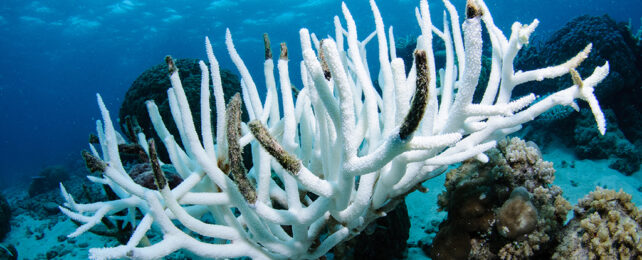
The real threat here is that we know little or nothing about how this might unfold. It is likely that one such ecosystem highly vulnerable to warming (combined with the effects of ocean acidity) will be the Great Barrier Reef. Virtually all projections have the Reef as highly vulnerable by as early as 2050.

Other ecosystems seen as vulnerable are the eastern Australian Alps, eastern Queensland, Kakadu, the Murray–Darling Basin, the Queensland wet tropics, south-west Western Australia and the sub-Antarctic islands.

Reducing future change
A further challenge is to work across political jurisdictions and across societal sectors to lower our greenhouse gas emissions. This means making major changes to the way we obtain and use energy.

How do we meet the obvious amenities of energy use without releasing CO2 into the atmosphere? Fortunately, there are many options – including modifications to the efficiency of existing fossil-fuel conversion systems, the capture of CO2 and its sequestration under the ground and the expansion of nuclear power generation. In addition, there is potential in the so-called renewable energies of solar thermal, solar photovoltaic, wind, tidal and geothermal.

Two points stand out. First, policy to deal strategically with a changed world (sourcing and usage of energy) requires the application of rigorous balancing of all options against the following issues:

  • economic costs are poorly defined in this changing world of carbon trading, increased market share and technology improvements;
  • in some cases, even the technological feasibly remains uncertain;
  • the rate at which alternative energy sources can be brought online, both for meeting energy demands and in terms of emissions reduction; and
  • in the real world, community perceptions about each technology, that may or may not be soundly or objectively based, nevertheless exist and constrain changes.

These facts strongly point to the establishment of a portfolio approach, where the risk of investment is limited by investment across a number of options and through time with an evolving relative contribution.

Second, in the many studies carried out thus far – including those of Nicholas Stern, the IPCC, the Australian Business Roundtable, AGL/WWF, Monash University, the Climate Institute, Australia21 and McKinsey to name a few – the costs to the Australian economy of making quite massive changes to our energy system is likely to be in the order of less than 0.1 per cent of GDP per annum. Such analyses need more work, but they jointly point to the conclusion that the costs of inaction are likely to be much greater.

Inequities
A changing climate will impact very differently on different regions of the world, and even the regions of Australia. Yet no two nations have the same capacity to respond to those changes, given their differential degrees of development, technology or organisational skills. Further, there is a huge discrepancy between the current or accumulated contribution to planetary warming by individual nations (or persons).

How will these inequalities feed into global or regional agreements concerning mitigation and adaptation responses to climate change? Will there be a willingness to transfer wealth between jurisdictions in an attempt to share these responsibilities? Are there important opportunities for doing just that?

The regional sharing of mitigative actions with New Zealand and our developing neighbours to the north and east could potentially provide for a rapid and phased reduction of emissions, which simultaneously treats issues that exist aside from climate change but might be exacerbated by it.

These might include lower global emissions, more sustainable forestry and land-use practices, the provision of jobs and improved social security for the local peoples, protection of unique ecosystems and provision of other collateral advantages, such as traded Australian access to resources needed in our transitioning economy.

Dr Graeme Pearman AM FAA FTSE trained at the University of Western Australia. He joined CSIRO in 1971 and was Chief of Atmospheric Research from 1992 to 2002. His personal research focused on the global carbon budget. He now directs a consultancy contracting to the private and public sectors. Awards include the CSIRO Medal, a UN Environment Program Global 500 Award and a Federation Medal.


Editor's Note: This article was first published in the April 2008 edition of the Australian Academy of Technological Sciences and Engineering's (ATSE) Focus Magazine (number 149, Climate Change). This article is under copyright, for permission to reproduce please contact ATSE.
 

Advertisement

Advertisement

hidden image hidden image hidden image hidden image