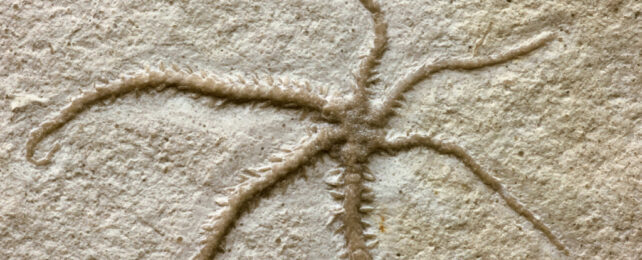
The researchers believe the Rhinodipterus
lungfish looked like this.
Image: Dr Richard Barwick, ANU
A massive plunge in global oxygen levels – and not freshwater frolicking – could have led to the rise of air-breathing animals on Earth, a new study argues.
Australian researchers have made the claim after analysing the fossilised remains of a new lungfish species from Gogo in northern Western Australia that lived roughly 375 million years ago.
PhD candidate Alice Clement from the Australian National University and ANU Adjunct Professor John Long, now based at the Natural History Museum of Los Angeles County, have just published a paper linking low global oxygen levels in the mid-Devonian period with the fossil Rhinodipterus, a marine lungfish species discovered in 2008 that is believed to be the first of its kind.
“The Rhinodipterus specimen has a number of features that suggest it was air breathing, including a long mouth cavity and articulations of its cranial ribs, which are important in the living forms of lungfish air-gulping behaviour,” said Ms Clement from the Research School of Earth Sciences at ANU. “Yet Rhinodipterus lived in the ocean, not in freshwater, which runs counter to the standard theory that fish evolved the ability to breath air once they moved to freshwater habitats.”
In order to explain the existence of air-breathing adaptations in a marine lungfish, the researchers looked to environmental factors other than habitat. They turned to existing knowledge about global oxygen levels in the Devonian, which fell as low as 12 per cent of the total atmosphere. Today oxygen levels are at 20 per cent.
“This plunge in global oxygen levels would have been a strong selection pressure on lungfish and other animals, including the tetrapods – the fish-like ancestors of land animals,” explains Professor Long. “This makes us believe that breathing air arose twice at this early time in vertebrate evolution: once in lungfishes, and once in the fish lineage leading to land animals, and ultimately to us.”
The researchers say this discovery adds an important piece to the puzzle of how life on Earth evolved. The next step will entail searching for more specimens similar to the Rhinodipterus find in order to bolster their theory.
“The Rhinodipterus specimen is the only one of its kind we’ve found to date,” Ms Clement said. “This research suggests we can widen our search for air-breathing adaptations in fossils from other marine sites in addition to Gogo.”
The research, funded by the Australian Research Council, is published in the Royal Society journal Biology Letters this week.
Editor's Note: Original news release can be found here.
|