Department of Environment and
Conservation have given the WA timber
industry a gold star for its effects on local
waterways.
Image: iStockphoto
WA’s timber industry has received a glowing report card from scientists at the Department of Environment and Conservation, on the back of a paired-catchment study into the impact of harvesting and silviculture practices on the quantity and quality of local waterways.
The long-term study, which commenced in 1999, has confirmed that current harvesting practices are not having a detrimental impact on salinity and turbidity patterns in streams within the State’s jarrah and karri forests.
It builds on the outcomes of similar research from the early 1980s which showed that the prevailing harvesting methods, despite being more intensive than today’s, had a transient increase on streamwater salinity.
The increase was considered acceptable at the time and further reduced with subsequent modifications to harvesting requirements.
By comparison, the latest study focuses on two catchments within the State’s forests, one of which received a standard timber harvest and associated silviculture while the other received more intensive treatment.
According to DEC Science Division’s acting research scientist Joe Kinal, the latest study has helped confirm that earlier modified harvesting practices remain appropriate today.
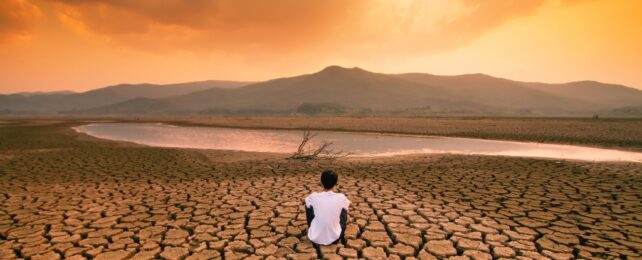
“We have discovered that within the settings of the current drying climate and declining groundwater levels, neither the standard nor the more intensive timber harvest or silviculture poses a risk of increased stream salinity,” he says.
“In light of this, we believe there is no reason to change the current prescription as it confirms that the practices which were adopted as a result of the original study a couple of decades ago are still very much appropriate.
“With regards to turbidity however, we believe there is a need to be vigilant on the design of drainage structures near stream zones, to ensure that erosion does not occur in the vicinity of streams and to minimise the conduct of turbidity into those waters.”
Mr Kinal says the study has also highlighted an unexpected finding.
“What we have learned since the study began is that the effect of climate change on groundwater tables is long-lasting and quite intense.
“When we began, there was not a lot of interest in the way groundwater tables and stream run-offs were trending and those patterns did not become apparent until some years after we started our research.
“That is the benefit of long-term studies of course – you can only gauge a trend if you have a number of years, and preferably decades of, data at your fingertips.”
Mr Kinal says the DEC will continue to monitor the outcomes of the latest study.
A story provided by ScienceNetwork WA - Activate your connections to science. This article is under copyright; permission must be sought from ScienceNetwork WA to reproduce it.
|