ScienceAlert Homepage

TOP JOBS:
Oldest known bacteria discovered
ScienceNetwork WA   
Thursday, 25 September 2008
bacteria.jpg
Bacteria found in oil reservoirs deep underground
could provide scientists with valuable information
regarding climate change and the search for
extraterrestrial life.
Image: iStockphoto

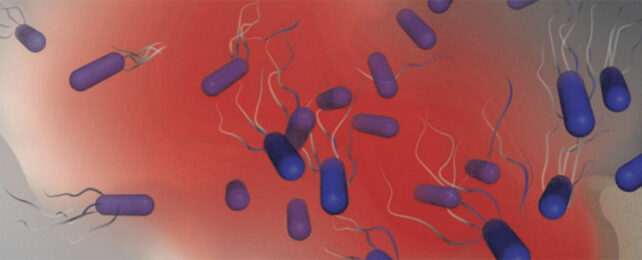
The discovery by Western Australian and German scientists of bacteria thriving in oil reservoirs 2km below the Earth could hold clues to life in the deep biosphere – and on other planets.

The anaerobic bacteria, growing in the absence of oxygen, were found in petroleum samples from sediments of up to 145 million years old from basins in South America, central Europe and the Middle East.
 
“This is the deepest and probably the oldest evidence of living bacteria ever found,” says Professor Kliti Grice of Curtin University of Technology.

“(Our research) shows the presence of phospholipids from the cell membranes of bacteria. These living microbes degrade the oil. This has implications for the oil industry because it’s reducing the quality of the oil.”

The discovery could also have wider implications for scientists studying climate change and for the search for extraterrestrial life.

“The deep biosphere is a really hot topic because little is known about how the microbes cope with these extreme environments,” Prof. Grice says.

“These deep microbes influence biogeochemical cycles and are thought to exert a control on climate dynamics.”

Some microbes have adapted to conditions that include high pressure, high and low temperatures and toxic chemicals. Further insights into the bacteria’s ability to survive in such extreme conditions could help researchers understand the existence of life on planets such as Mars.

A paper on the research by Prof Grice, PhD student Christian Hallmann and Professor Lorenz Schwark at the University of Cologne was recently published in the Nature Geoscience journal.

Prof Grice is also collaborating with Professor Peter Ward at the University of Washington in Seattle to establish the effects of harsh and extreme environments on algae and bacteria grown in chemostats.

“We are also measuring the stable isotopic compositions of various phospholipid fatty acids that will reflect the biochemical pathways and their biochemical precursors occurring in bacteria,” she says.

Prof Grice is director of the WA Organic and Isotope Geochemistry Centre at Curtin University. She is a past recipient of a Premier’s Science Award for Research Excellence and in 2005 received international attention for her work to uncover the causes of the largest mass extinction on Earth 252 million years ago, reported in the journal Science


A story provided by ScienceNetwork WA - Activate your connections to science.  This article is under copyright; permission must be sought from ScienceNetwork WA to reproduce it. To comment on this article go to the original story here.
 

Advertisement

Advertisement

hidden image hidden image hidden image hidden image