_________________________________________________
Subterranean water running out
Friday, 22 August 2008
ScienceNetwork WA By Denice Rice
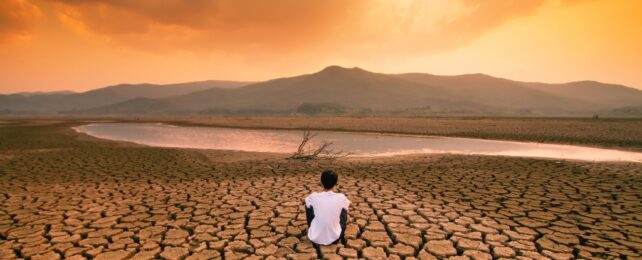
istockdesertwater.jpg
Image source: Istockphoto

WA scientist Russell Speed is warning that climate change may rob Western Australia of a sustainable underground water supply and we should regard our state’s underground water as a minable commodity on par with nickel or iron.

A research officer with the Department of Agriculture’s Catchment Hydrology Group in Geraldton, Mr Speed says research shows our underground water reserves are not being recharged at a sustainable rate and they need to be treated like any other finite resource. 
 
“Policy makers need to realise that by taking underground water we are mining a limited resource, just as digging up iron ore is mining a limited resource,” he says.

“If we treat it as a minable resource we will have to rethink the way we use it and perhaps we will decide that using it to water lawns, for example, isn’t the best use of a limited resource.

“Until now underground water has been allocated on a first-come, first serve basis, which was fine when the supply was being recharged every year, but climate change has robbed us of that and we need to think more wisely about how we allocate what we have.”

Mr Speed says the results of a groundwater monitoring network that has been progressively installed in the region since 1990 shows underground water levels in the Mid-West have been in decline since 2000 and rainfall predictions for the region mean there is little chance of the trend being reversed.

Average annual rainfall in the region is predicted to decline by as much as 20 percent by 2030 and 60 percent by 2070, relative to 1990 levels.

Mr Speed says that while everyone is talking about the current year having bumper rainfall, in reality, the falls have only been about average to what they would have been before 2000 and could still end the season below average.

“It just seems a particularly wet season in the context of the past four or five really dry years,” he says.

“It’s hard to tell at this stage how much recharge this year’s rains will bring, but they won’t be enough to make up for the decline of the past couple of years.”


A story provided by ScienceNetwork WA - Activate your connections to science.  This article is under copyright; permission must be sought from ScienceNetwork WA to reproduce it. To comment on this article go to the original story here.
 
| | More
Have You Read These Related Stories? ____________________________________________