News _________________________________________
Astronomers prove Einstein right
Monday, 16 June 2008
Swinburne University of Technology
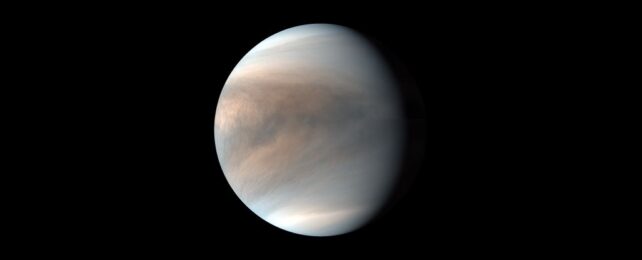
whitedwarf.jpg
Einstein's theory of relativity accurately predicted the
orbital changes over time of these two uneven stars.
Representation by the Centre for Astrophysics and
Supercomputing.

Albert Einstein really did know what he was talking about, according to new research conducted by a team of astrophysicists from Swinburne University of Technology.

Published in scientific journal Physical Review, the research tests Einstein’s general theory of relativity when applied to a very unique pair of stars that are unequal in mass and size. The researchers found that Einstein’s theory still stands up, almost 100 years after it was originally proposed.

One of the most celebrated theories in modern physics, the general theory of relativity forms the basic foundation for many observable phenomena in the Universe - including understanding how the Universe formed and how it is evolving.

However, because the Universe is such a complex system, many scientists believe that Einstein’s theory might not be able to explain things fully and comprehensively in all situations.

The aim of this study, undertaken by Dr Ramesh Bhat, Professor Matthew Bailes and PhD student Joris Verbiest, was to find out how well the theory stood up in new and untested situations.

Pairs of stars that rotate around each other in close orbit make excellent laboratories for testing the predictions of Einstein’s theory. However up until now, researchers have only looked at systems in which the two stars are nearly equal in mass and size.

“Einstein’s theory predicts that stars in such a system will come closer and closer to each other as they lose energy due to gravitational radiation,” said Bhat. “Previous research has supported Einstein’s theory in this context.”

However some theories have predicted that stellar pairs with different degrees of compactness would behave in a different way. The Swinburne team decided to conduct their intensive study using this type of stellar system. One of the stars in the system they observed is a neutron star, which is heavier than the Sun but compressed to the size of Melbourne. The other is a white dwarf, which has the same mass as the Sun but is about the size of the Earth.

Using the Parkes radio telescope in New South Wales, the researchers measured the rate at which the two stars were getting closer to one another over a period of seven years.

“Einstein’s theory predicts that the pair’s orbit should shrink at a rate of approximately two millimetres per day. Using extremely precise measurements we were able to track this rate of shrinkage. We found it to be exactly the same rate that was predicted by the theory,” said Verbiest. “This confirms that Einstein’s theory on its own is very comprehensive.”

The team’s research is the most powerful neutron star-white dwarf gravitational experiment ever conducted, and has gone a long way to showing how all-encompassing Einstein’s theory is. The team is optimistic about taking the research even further.

“In the future we will be able to perform even more stringent tests using this interesting stellar pair. Such tests will help us to get closer in determining whether Einstein’s theory is indeed the correct theory of gravity,” said Bailes.


Editor's Note: Original news release can be found here.
 
| | More

Have You Read These Related Stories? ____________________________________________