Ice 'factories' under climate crunch
Tuesday, 10 July 2007
Antarctic CRC

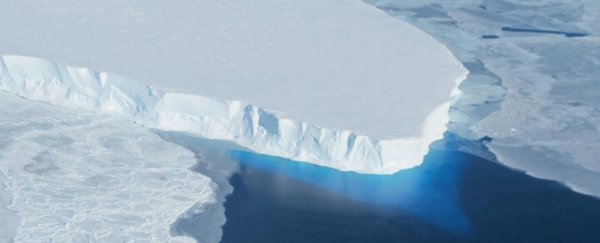
Future climate change may affect global ocean circulation because of reduced Antarctic winter sea ice formation in large open water areas known as polynyas.

Australian scientists from the Antarctic Climate & Ecosystems Cooperative Research Centre (Antarctic CRC) and the CSIRO used high-resolution climate models to investigate what might happen in the Mertz Glacier Polynya under different future climate scenarios. Their results, to be published this week in the Journal of Geophysical Research, indicate that future warming will decrease the formation of sea ice in the polynya, resulting in possible changes to the global ocean overturning circulation. The study contributes to international research in the International Polar Year.

'Polynyas are extremely important as sea ice 'factories'', said lead researcher Simon Marsland. 'The Mertz Glacier Polynya covers only 0.1% of the sea ice zone, but is responsible for 1% of the total sea ice production in the Southern Ocean and has a significant influence on the global ocean circulation.'

A polynya is a large body of open water or an area covered by very thin ice that is found in the sea ice in the winter. The name comes from the Russian word for open or hollow. Many recur in the same region over many years. Polynyas may range in size from a few square kilometres to more than 350,000 square kilometres.

Icy winds blowing off the Antarctic continent cause sea ice to form rapidly on the water surface in the polynya. The winds continually blow the ice offshore, exposing more water to the subfreezing temperatures, so more ice forms and the process continues.

Salt is expelled as the water freezes, forming dense brine that sinks and flows down the continental shelf of Antarctica to form Antarctic Bottom Water - the densest water in the open ocean. This water flows outward from the Southern Ocean and through other ocean basins as part of the global ocean circulation that distributes heat, nutrients and gases around the world.

The sinking water also helps lower atmospheric concentrations of carbon dioxide by carrying dissolved carbon dioxide from the surface to the deep ocean where it may be sequestered for thousands of years.

Twenty-five percent of all Antarctic Bottom Water forms in the Australian Antarctic Basin, where the Mertz Polynya is the primary source. 'Decreased sea ice production in the Mertz Polynya will mean that less Antarctic Bottom Water is formed,' said Dr Marsland. 'This could affect both the global ocean circulation and the ability of the ocean to absorb carbon dioxide in the future.'

'Polynyas are extremely important to future climate,' he added. 'Our study is the first to use high-resolution models to examine how they may be affected by climate change.'


Editor's Note: Original news release can be found here.
 
         Add to Google Reader or Homepage RSS Alerts           Email Alerts